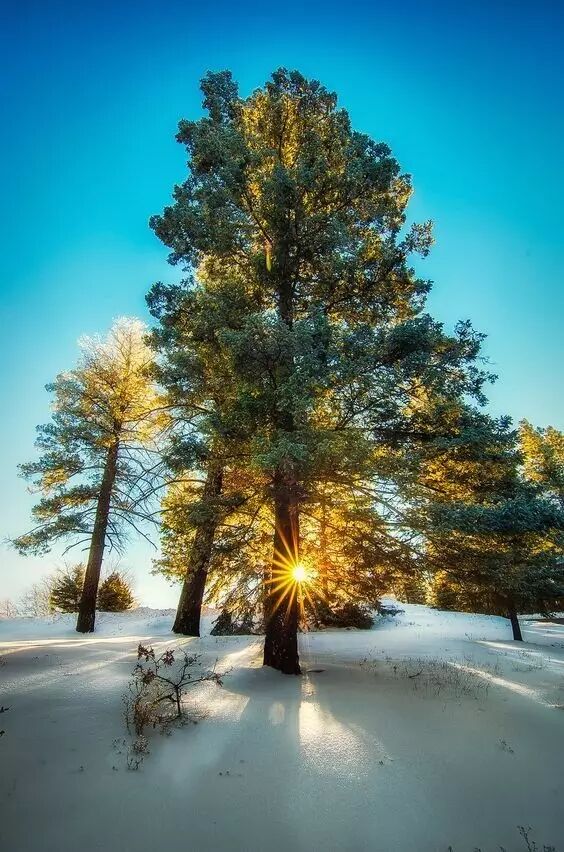
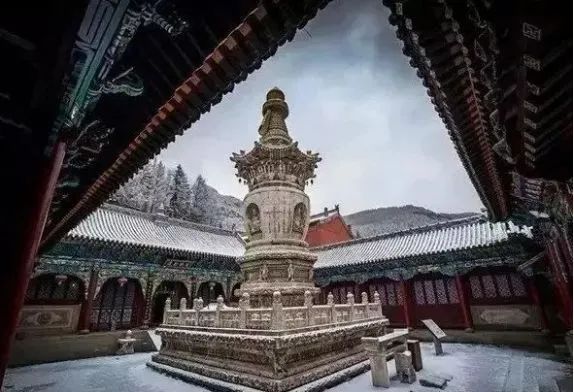
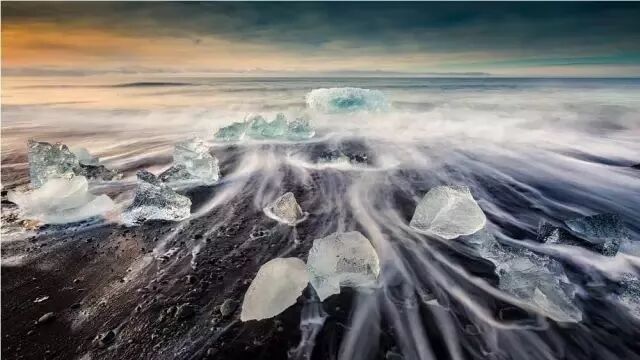
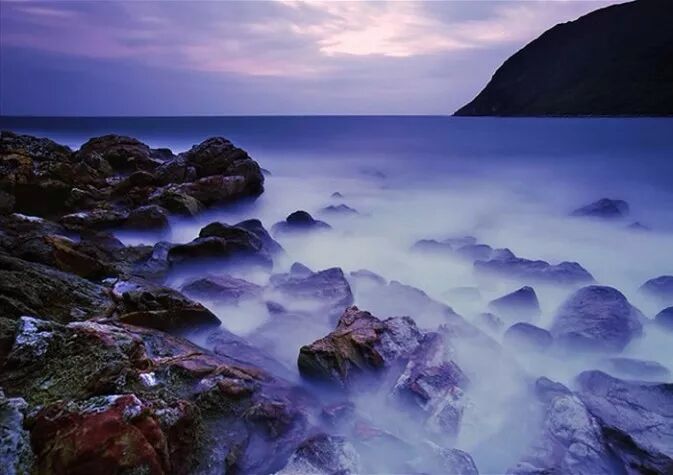
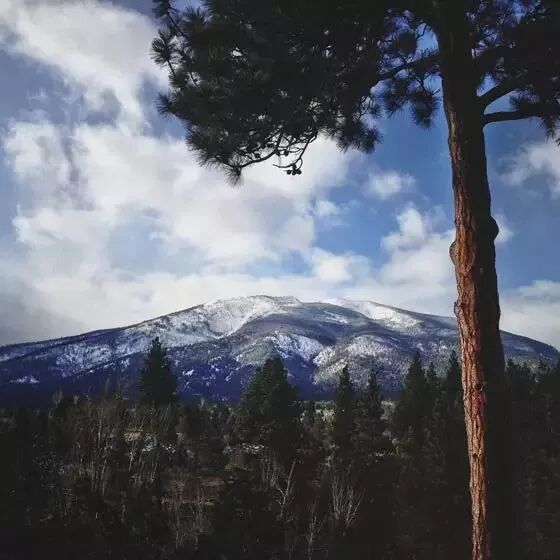
Sunrise in the early morning and sunset in the evening are the best times to photograph ice and snow scenery. The light at this time is soft and warm, gold-plating the icy snow and creating a dreamy atmosphere. When shooting in backlight, the texture and layering of the snow are more distinct, and the silhouettes of trees are particularly moving in the warm sky.
To capture a charming artistic conception of ice and snow photography, we can start from the following aspects:
Master exposure and white balance
Exposure compensation: Ice and snow reflect strongly, and the camera is prone to underexposure. You need to manually increase the exposure compensation, generally +1 to +2, which is adjusted according to the light. Histograms can be used to assist judgment, ensuring that the snow is bright and details are preserved.
White Balance Settings: Manually adjust white balance to avoid automatic mode deviation. It can be around 5200 K on sunny days, 6000 K-7000 K on cloudy days or shadows, or it can be deliberately cold or warm according to creative needs to create a special atmosphere.
Use light and angle
Side light and backlight: Side light can highlight the texture and three-dimensional sense of ice and snow, while backlight can outline the outline and create silhouette effect, making the ice and snow more crystal clear. Avoid smooth light, because it can easily make the picture dull.
Prime time: The oblique light in the early morning or evening is soft and colorful, which can add a warm or dreamy atmosphere to the ice and snow. Shooting at this time can strengthen the contrast between light and shadow and color level.
Composition and framing
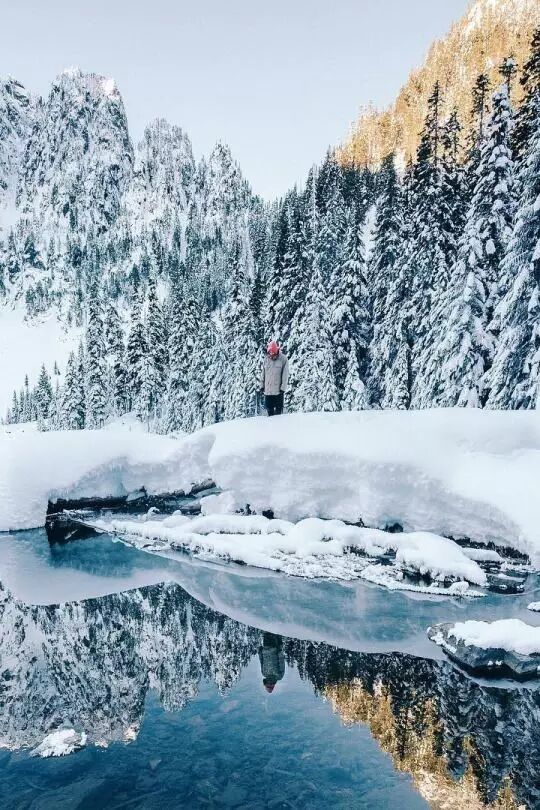
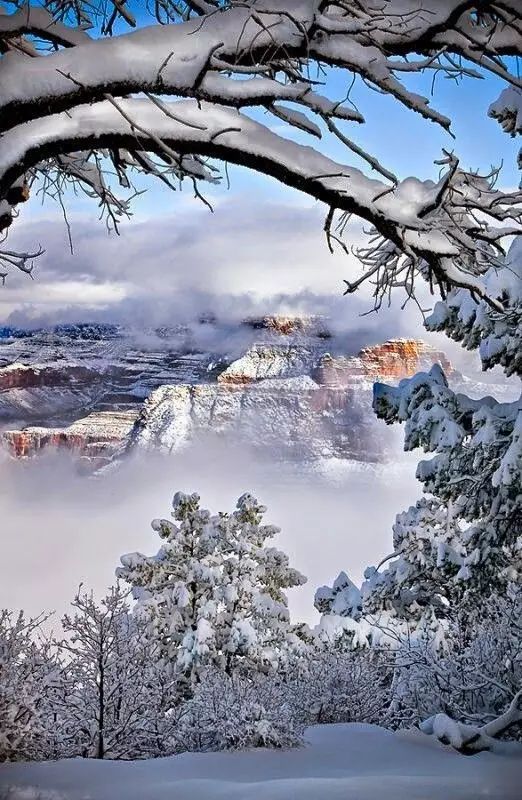
Using the layering of foreground, middle view and long view can enhance the sense of depth of the picture. A tree covered with rime and a winding river can all be excellent foreground elements. Using the rule of thirds composition, the horizon is placed one third of the frame, allowing the sky or snow to occupy a larger proportion, creating an open visual effect.
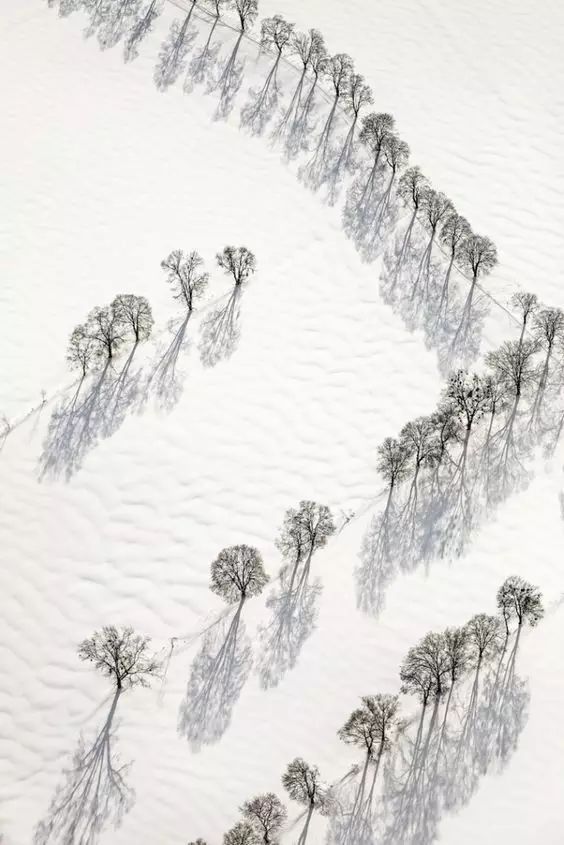
White space and simplicity: Ice and snow scenes are often dominated by white, and a large amount of white space can be used to highlight the main body or create an ethereal artistic conception. Simple pictures can convey a feeling of tranquility and purity.
Find contrast: Use color contrast (such as red, yellow and other warm colors with white ice and snow) or light and dark contrast to attract the audience's attention and break the monotony. It can also capture the interaction between ice and snow and natural elements (such as trees and mountains) to increase the storytelling of the picture.
Foreground and background: Choose interesting foregrounds (such as frozen branches and snow-covered stones) to enhance the sense of layering, while the background should be concise or coordinated with the subject to avoid clutter.
Capturing dynamics and details
Don't ignore small scenes except big scenes. Close-ups of ice, rime and snowflakes can all show the crystal clarity of ice and snow. UsingPolarizerIt can eliminate reflections and make the sky bluer and the ice and snow whiter.
Dynamic moment: Shoot falling snowflakes, people's activities or ice and snow sports, use a high-speed shutter (more than 1/200 second) to freeze the action, or use a slow door (1/15 second-1/60 second) to express the sense of snowflake flow and create a dynamic atmosphere.
Macro shooting: Focus on the microscopic world of ice and snow, such as the shape of ice crystals, snowflakes or the texture of frozen plants, showing the unique texture of ice and snow and the beauty of details.
Post-processing
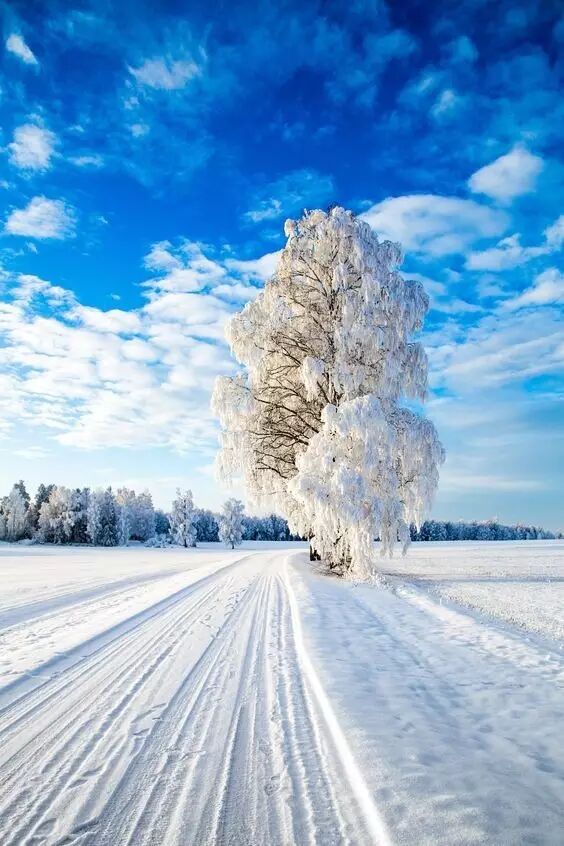
Adjust color and contrast: moderately enhance contrast and highlight the whiteness and texture of ice and snow; Adjust color saturation to intensify warm or cool vibes, but avoid over-processing.
Cropping and composition optimization: Crop the picture, remove redundant elements, strengthen the composition focus, and make the artistic conception more concentrated. You can use post-software to fix flaws, but maintain a natural realistic feel.
Through the above methods, combined with the observation and creative expression of the ice and snow environment, poetic and infectious ice and snow photography works can be taken.