Many beginners in photography are often frightened by the high price of camera lenses when buying them. Compared with cheaper mobile phones, good camera lenses such as "Big Sanyuan" start at a very expensive price. If it is an ultra-long-range zoom lens needed for ecological photography or sports photography, the price is even more expensive. The lens is essentially a glass product, and the design cost can be shared equally by the huge sales volume. Why can the price be so expensive?

First of all, the lens is more than just glass, and the structure of a good lens is complex.
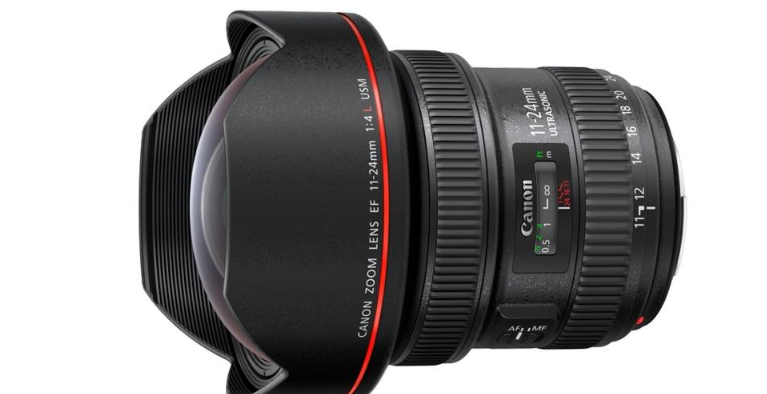
The lens is not only a glass lens, but also includes coating, focus drive system, anti-shake function, waterproof and dustproof structure, etc. Take the Canon EF 11-24 mm f/4 L USM ultra-wide angle lens as an example. In this lens, Canon uses super UD lenses, UD lenses and polished aspherical lenses; In terms of lens coating, antifouling fluorine coating, SWC sub-wavelength structure coating and ASC air spherical coating are adopted; It adopts rear focusing and has a waterproof and dustproof structure. It almost brings together Canon's current high-end lens production technology.
Secondly, the lens price is actually very expensive.
Fluorite is formed by calcium fluoride crystals, which has ideal chromatic aberration compensation effect, but pure natural fluorite is very small in size and cannot be used in SLR camera lenses. Therefore, Canon developed and established the artificial crystallization technology of fluorite, and successfully applied it to lenses. However, even artificial fluorite is still very expensive, and it is difficult to popularize large fluorite lenses on many lenses. Therefore, Canon has developed UD (ultra-low dispersion) lenses, which are optical lenses with low refraction and low dispersion characteristics. By using UD lenses, the elimination effect of secondary spectrum is improved. Two UD lenses can achieve the effect comparable to one fluorite lens, and have good chromatic aberration compensation performance.
Third, the lens design is difficult.
In the early years, the world's civil optics field was almost monopolized by the Japanese. Almost all optical lens patents from 1950 to 2000 were applied for by the Japanese. Decades of experience can't be fully understood in three to five years or even overnight. The lens is a precision instrument. Although the parts can be surveyed and mapped by special equipment, the surveying and mapping accuracy is 0.01 mm different. After all the parts are finally assembled, the image quality may be obviously inferior to the original factory. In addition to drawings, the production process, assembly and debugging process, etc. will all affect the imaging quality and yield of the final lens.
Therefore, there are only a few common camera mirror manufacturers, such as Canon, Nikon, Sony, Pentax, Fuji, Panasonic, Leica, Zeiss, etc., and auxiliary lens manufacturers, such as Sigma, Tamron, Tuli, etc., are almost all Japanese manufacturers. When we buy camera lenses, we often hear licensed, parallel imports, second-hand, 90% new or refurbished machines, but we hardly hear cottage lenses. Because of the difficulty of lens design, few copycat factories dare to try to copy it.
Finally, lens sales are low.
On February 14, 2019, Canon announced that as of December 19, 2018, the cumulative production of Canon EF and RF series lenses had reached 140 million units. Note that this is all production from the birth of the EF bayonet in 1987 to the present day. Excluding RF mount lenses, the average annual output is really not much. Compared with mobile phones, cameras are not a necessity. In the office, restaurant, on the street..., almost everyone has a mobile phone, but not everyone has a camera and a lens. Demand determines sales, and sales affect prices, which is why lenses are so expensive.
These are the main reasons why camera lenses are expensive. Teacher Jin Hua once again reminded that beginners in photography don't need to directly buy expensive lenses such as "Big Sanyuan" when buying the first lens. Ordinary entry-level zoom lenses can learn photography well.