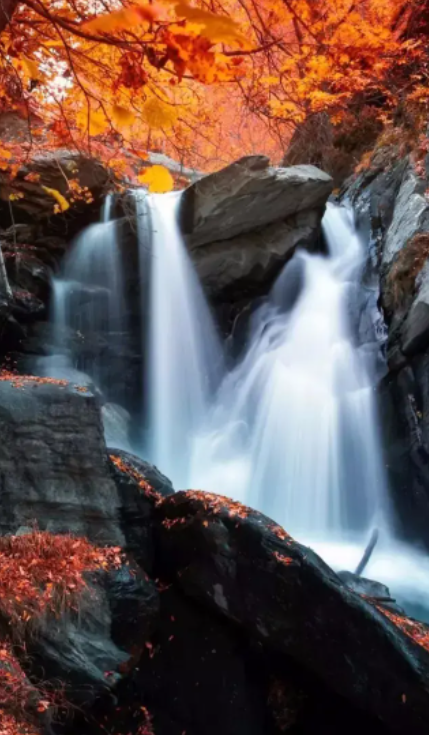
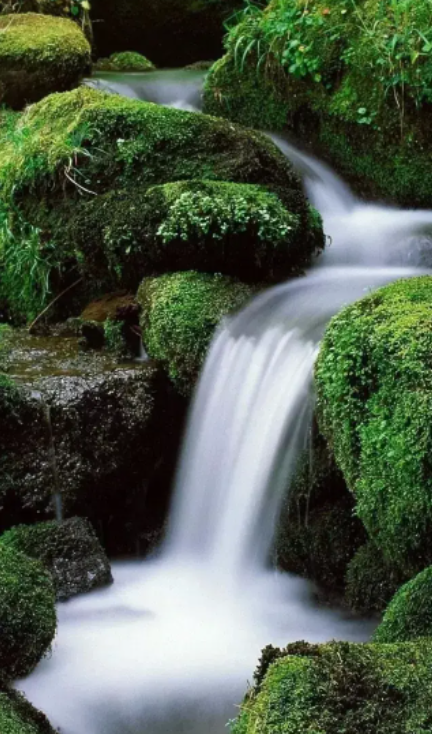
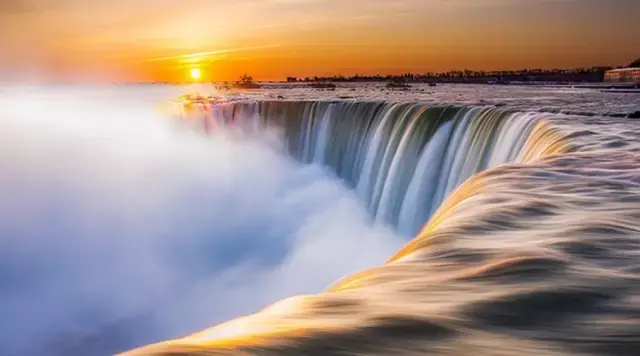
Different forms of art are different, and it is often difficult to use one to express the other. All kinds of water flows in the picture are as smooth as silk, and the picture is as dreamy as a fairyland, which can make people shine at the moment and have unique artistic charm.
Photography is a still art, but how to use still pictures to show flowing things, such as gurgling streams, the moving stars in summer nights, and the slight movement of willows? These scenery are all beautiful. How should photographers show them?
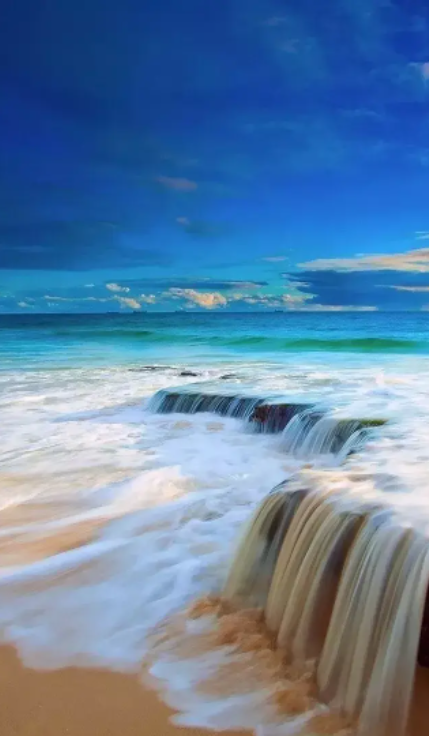
However, this is only "someone else's" work, and the result of your own shooting is hard to satisfy people. Why is this happening? Maybe it's just because you didn't pay attention to these four basic but very important points of long-exposure running water shooting techniques.
1. Use low sensitivity and small aperture to slow down shutter speed
Using a slower shutter speed to shoot the moving water flow can present the moving water flow as a silk thread. This technique can be used whether it is shooting seawater, waterfalls or streams.
The key point of shooting is to use the aperture priority shooting mode (Av/A) and set a small aperture value to reduce the shutter speed. As for the shutter speed, it depends on the subject. Usually, you can get a good effect by using the shutter speed of 1/8 s ~ 1 s.
It should be noted that due to the low shutter speed used, in order to avoid camera shake and blurring the picture, it is necessary to use a tripod with a shutter cable to shoot.
If you don't have a tripod, you need to place the camera in a stable place, such as the ground or rocks on the water bank, and then switch to "selfie" mode to let the camera shoot automatically.
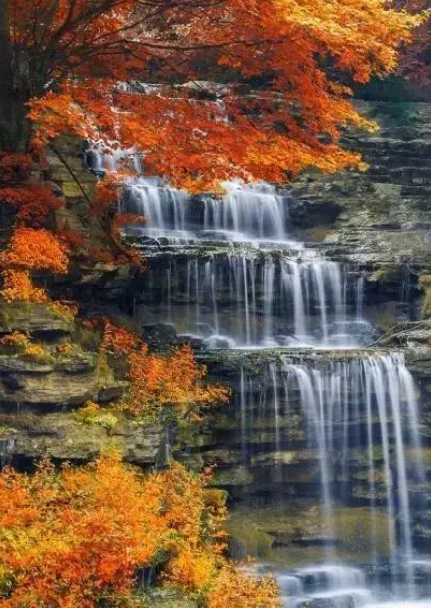
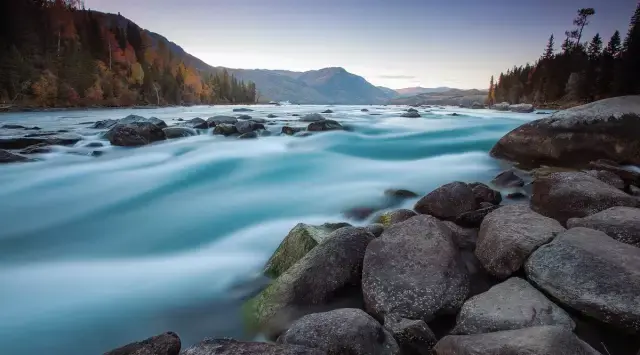
As shown in the figure below, it was taken by placing the camera on the rock on the shore and cooperating with the selfie mode.
Equipment preparation-
Tripod and shutter cable
Since you want to shoot a long exposure, a tripod is naturally essential; It's best to match the shutter cable to avoid the inevitable vibration when pressing the shutter directly by hand, which will have unnecessary impact on the picture.
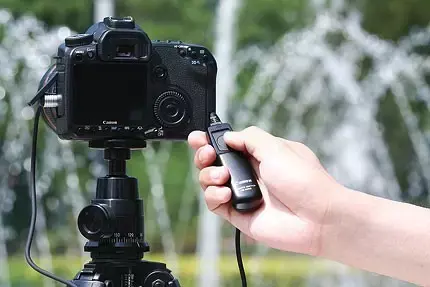
Tripod + shutter cable, long exposure standard
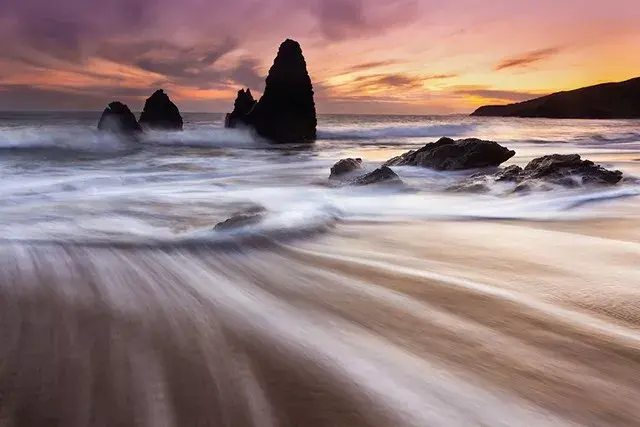
Different ND values have different gears for reducing exposure
When actually shooting, if the ambient light is strong, you can use the following methods to reduce the shutter speed.
1. Use a smaller aperture.
In order to avoid excessive loss of image quality, it is best not to use the minimum aperture value of the lens.
You can use an aperture value slightly larger than the minimum aperture. For example, if the minimum aperture of the lens is F 32, then the minimum aperture bottom limit that can be used is F 29.
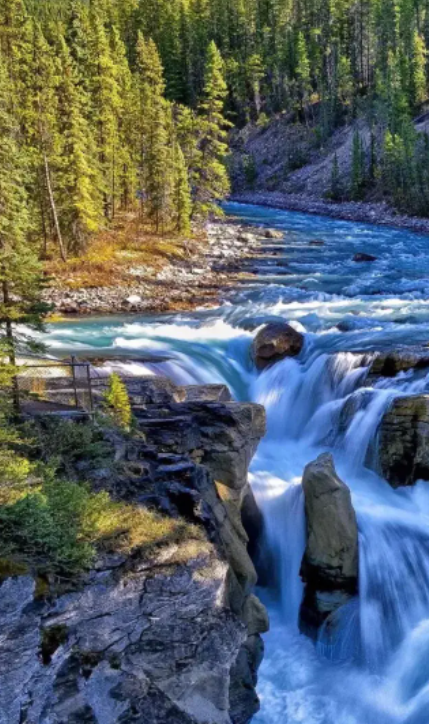
2. Shoot with the telephoto end of the zoom lens.
Many zoom lenses can achieve smaller apertures at the telephoto end. For example, the EF-S 18-135 mmF 3.5-5.6 IS STM lens can only reach F 22 at the 18 mm end, and can reach F 38 at the 135 mm end. to further reduce the shutter speed.
3. Reduce the ISO sensitivity value as much as possible.
Generally, the lowest value of the base sensitivity of the camera, that is, ISO 100, is used. If the camera supports downward expansion of sensitivity, ISO 50 can be used if necessary. If the sensitivity has been set to ISO 50, the aperture value has reached the minimum aperture of the lens, and the shutter speed cannot be reduced to the required value, you can choose the second method later.
Two. Select a water body
It's not that as long as there is running water, you can shoot a sense of flow with long exposure.
Let's first take a look at a long-exposure streamer water work to understand what kind of water condition is more suitable for long-exposure shooting:
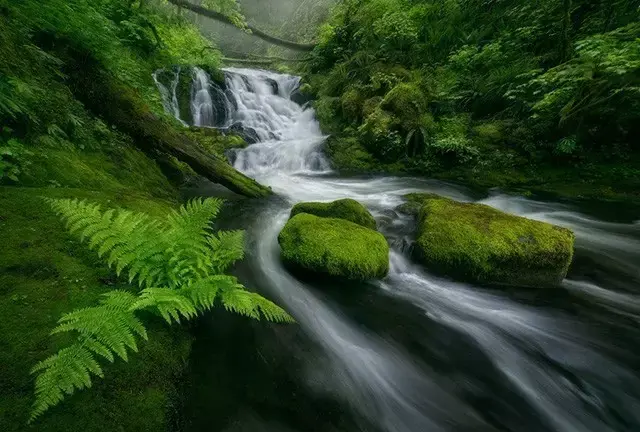
Don't just think about "beauty or not", observe where there is more fluidity
As shown in the figure above, the sense of flow is obvious in areas where the water body oscillates, such as near a waterfall, or when there are obstacles on the water surface that "cut" the water flow; In areas where the water body is relatively calm, as shown behind several big stones blocking the water flow in the picture, the sense of flow is very weak.
Therefore, if we want to shoot a sense of flow, we should make the water flow more "stirring".
When choosing a shooting location, you should try to choose areas with complicated hydrological conditions, such as winding mountain streams with frequent ups and downs, shoals with many stones, beaches washed by tides and waterfalls.
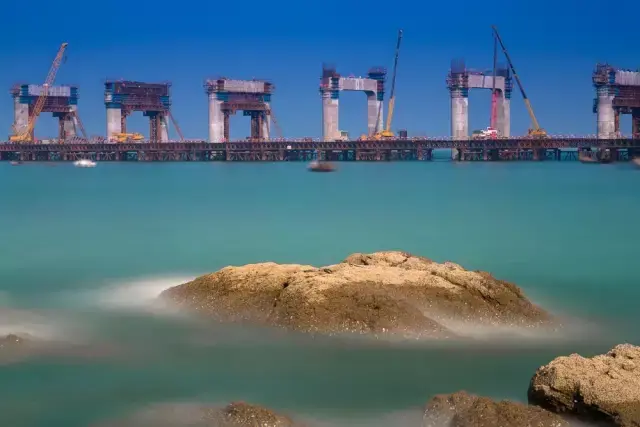
Areas with gentle water flow, almost no sense of flow
In areas with turbulent water flow, the sense of flow is obvious
Three. Pay attention to the composition
In terms of composition, the first question you need to consider is, shoot banners or vertical spokes?
Generally, if you are shooting a stream flowing horizontally, use a banner composition that emphasizes the horizontal width; When shooting waterfalls with obvious height differences, vertical composition is adopted to highlight the depth of space.
Not sure whether to use a banner or a vertical banner? Then take two pictures, compare the effects and then choose the appropriate one.
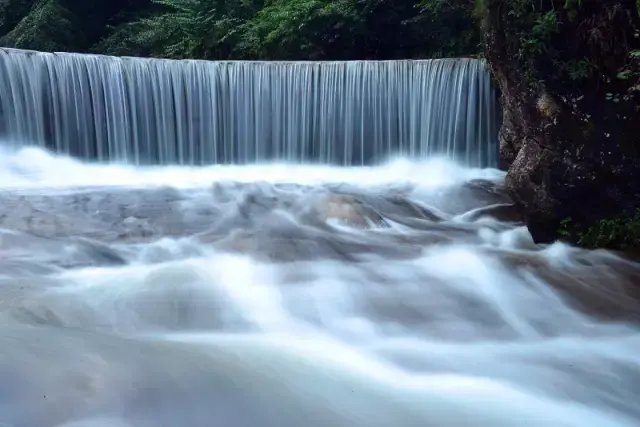
For a water body with both horizontal width and vertical depth, try taking a picture of each vertical banner
Another aspect to consider is the scale of the still object in the frame.
Appropriately adding some still life to the picture can highlight the sense of flow of water, but too large a proportion of still life will be counterproductive.
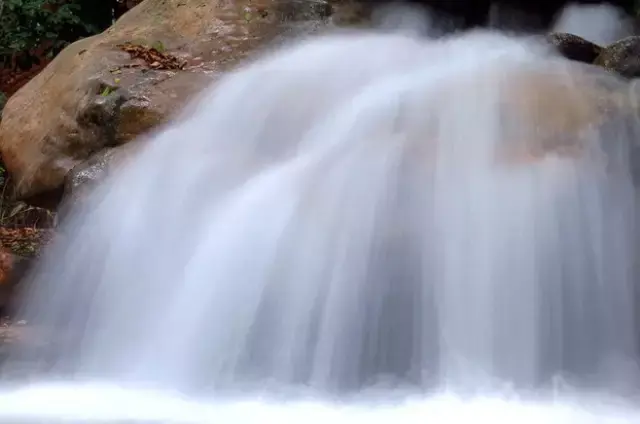
The proportion of still life is too small, does not highlight the sense of flow, and the picture is slightly monotonous
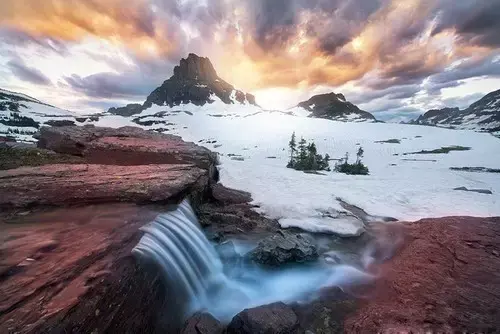
The proportion of still life is too large, and the presence of running water is very low
Generally speaking, keeping the still life ratio in the range of one-third to two-thirds tends to achieve the best results.
Four. Shutter speed
The shutter speed determines the shape of running water you shoot. Within a certain range, the slower the shutter speed and the longer the exposure time, the stronger the sense of flowing water body.
But that doesn't mean that a slower shutter speed is better. When the exposure time is very long, such as hundreds of seconds, the water flow in your photo may be completely atomized, just like this.
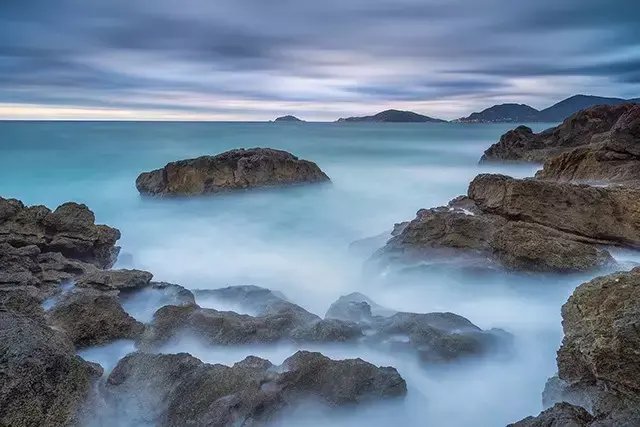
Atomizing effect like milk
This effect is actually beautiful, but it is not the effect we want. Try some other shutter speeds.
If you ask "What shutter speed is best?"
It is difficult to give a specific numerical standard, because everyone has different requirements for shooting effects; In addition, even at the same shutter speed, when the flow velocity of the water body is different, there will be different flow feelings.
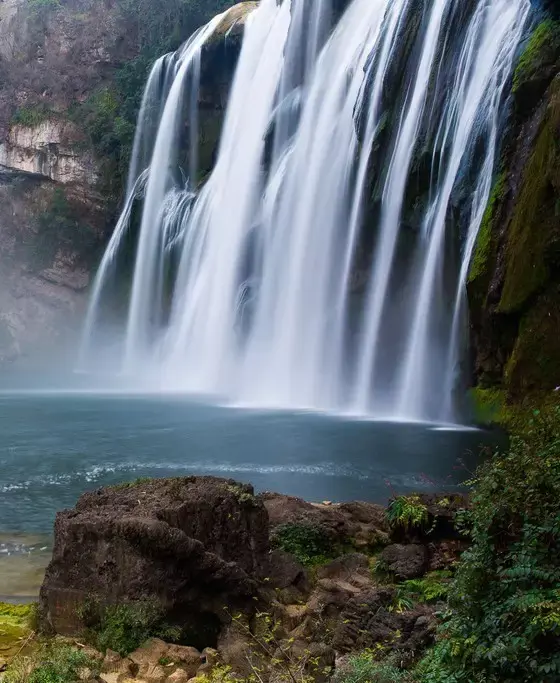
To get the same flow, the exposure time of the waterfall is shorter than that of the stream
So, try some more shutter speed; If it is a waterfall, you can try it from 1/2 second; A rushing stream, one second....... in short, to get the same sense of flow, the faster the water flows, the shorter the exposure time it takes.
Try a few more shutter speeds, and then choose the one you are most satisfied with.
Anyway, taking a long exposure of running water, the exposure time is only a few seconds at most, so try it slowly ~