What I want to share today is the photography skills for shooting beautiful sunsets, as well as their corresponding points and precautions, to help you choose the most suitable method for you according to the objective environment and subjective needs.
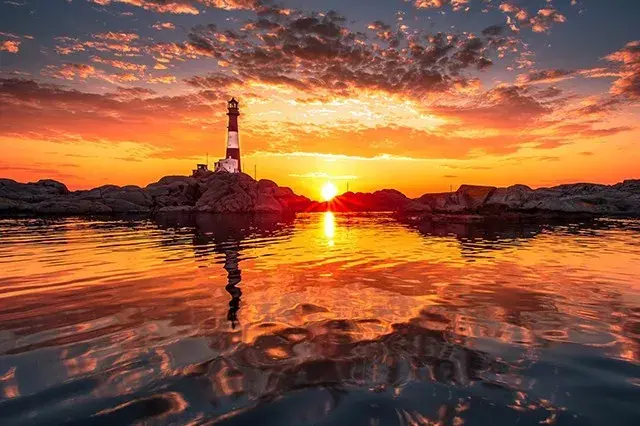
1. Central composition
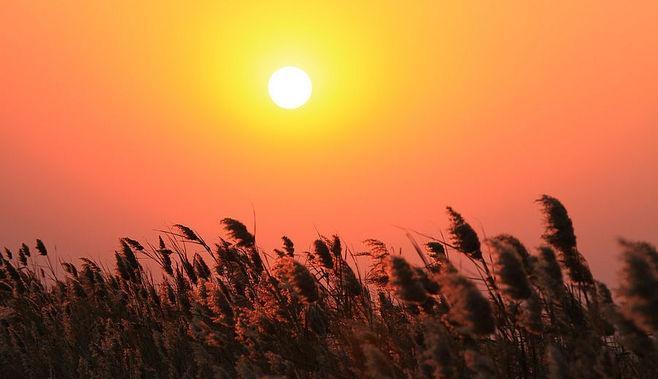
Putting the sun in the center of the picture can show the surrounding environment of the sun to the maximum extent, and have a good reflection of the colorful clouds in the air and the warm scenery on the ground:
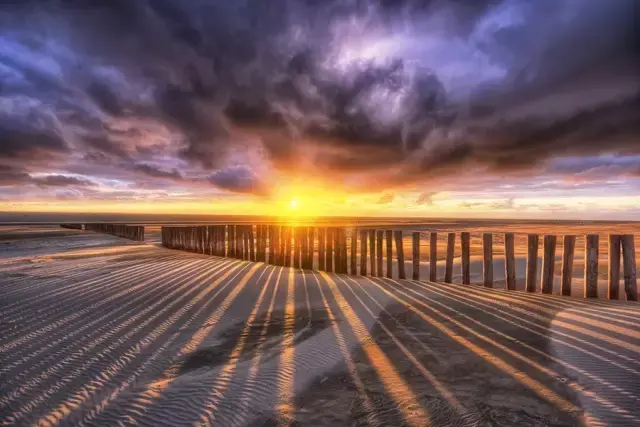
When there is a certain area of calm water in the scene, you can try to put the horizontal plane in the center of the picture, which can maximize the symmetrical beauty of entity and phantom reflection:
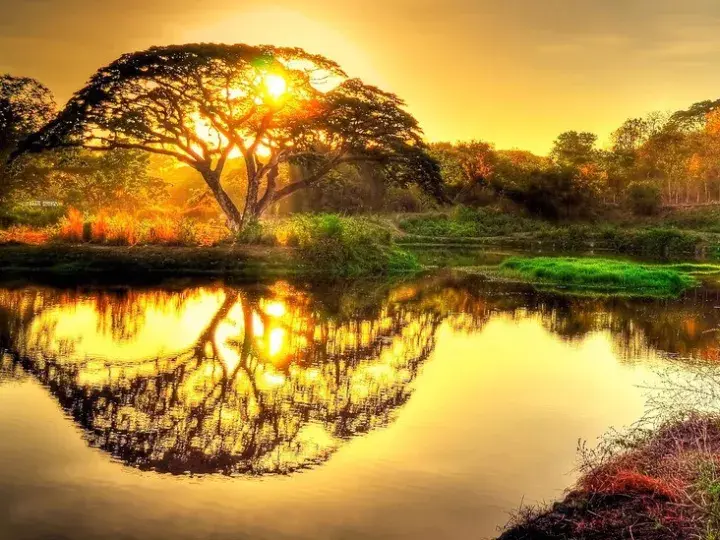
However, the central composition has high requirements for the richness of the scenery. It is best to have rich scenery in the sky and the ground, otherwise there will be a large area of "boring" parts:
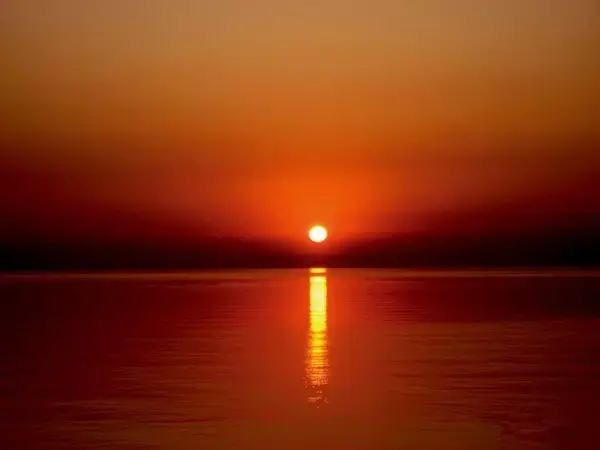
There are no clouds in the sky and no scenery in the sea. It is really boring
At the same time, due to the excessive light ratio, we must pay attention to avoid overexposure of large areas in the sky or underexposure of large areas on the ground:
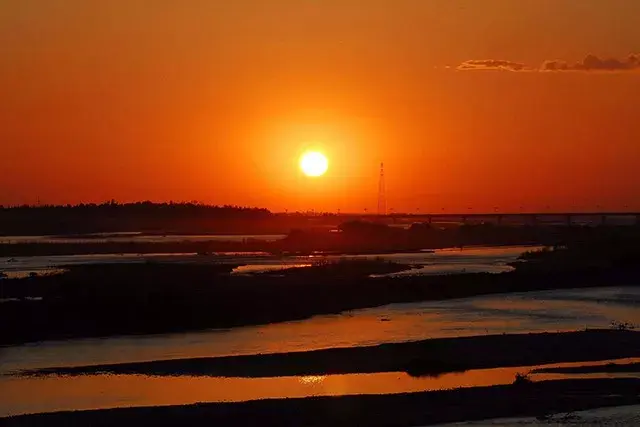
2. Rule of thirds composition
Unlike the central composition, the rule of thirds requires the sky and the ground to have rich scenery at the same time.
We only need to place the horizontal plane or horizon in the upper and lower third of the screen to selectively emphasize the scenery on the ground or sky.
Less ground scenery? Then take pictures of more colorful clouds in the sky; The sky is cloudless? Then take more pictures of the ground scene.
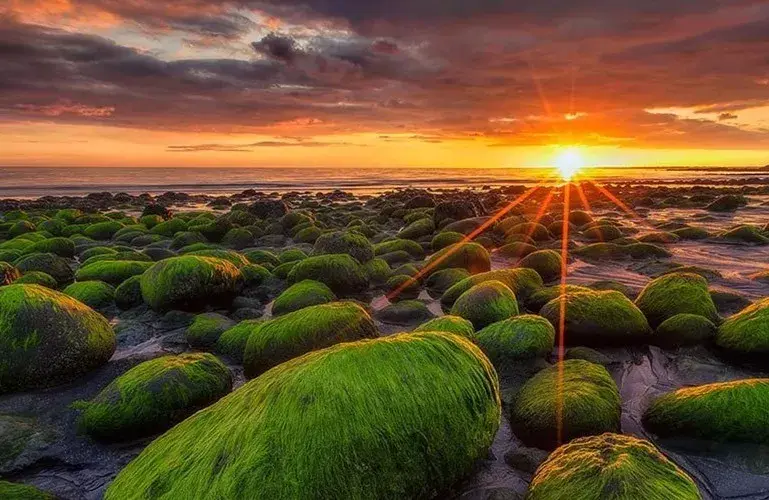
The ground scenery is rich, and the horizontal plane is placed in the upper third
The rule of thirds composition does not require exposure control as high as the center composition. You can selectively emphasize the sky or ground part of the scene, and then bias towards the emphasized part when controlling the exposure.
If the clouds in the sky are more interesting, expose them based on the clouds, and the silhouette or semi-silhouette of the ground scene is harmless; If the ground scenery is abundant, expose it based on the ground scenery, and it doesn't hurt to overexpose the sky slightly.
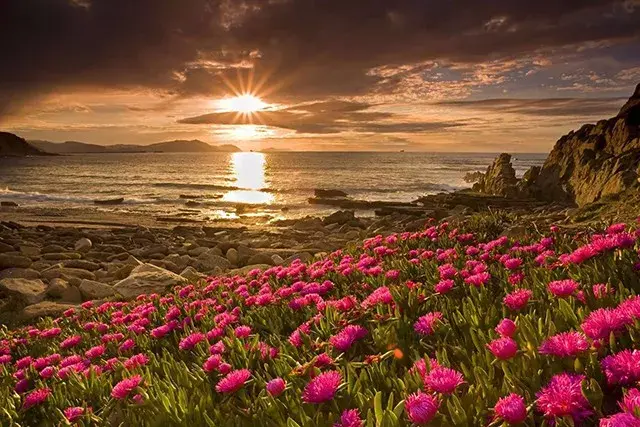
Upper third composition, mainly focus on ground scene when controlling exposure
When taking close-ups of the sun with medium telephoto, when the proportion of the picture of the sun body is large, it is also suitable to use the rule of thirds to compose the picture, which can effectively avoid the problem of rigid picture in the center composition, and at the same time, the picture is not balanced.
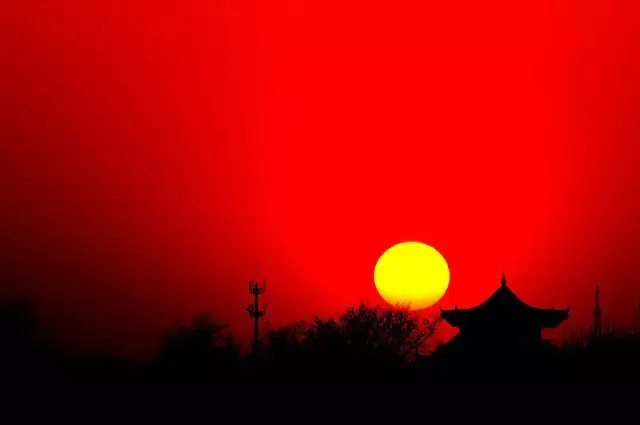
3. Edge composition
Edge composition can be regarded as the "extreme version" of the rule of thirds composition.
If you need to further selectively emphasize the scenery of the sky or the ground, it's the turn of edge composition!
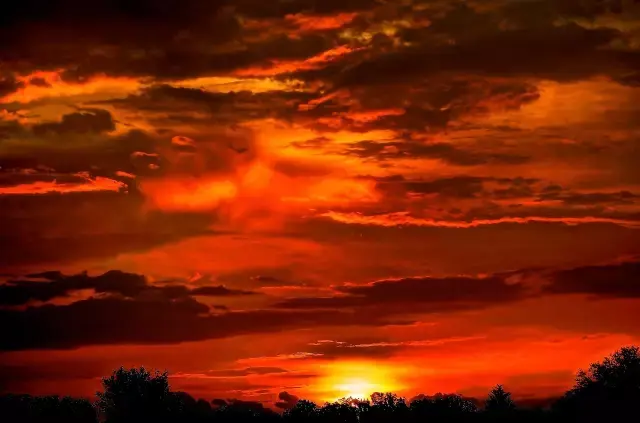
The sky is so beautiful, so keep more
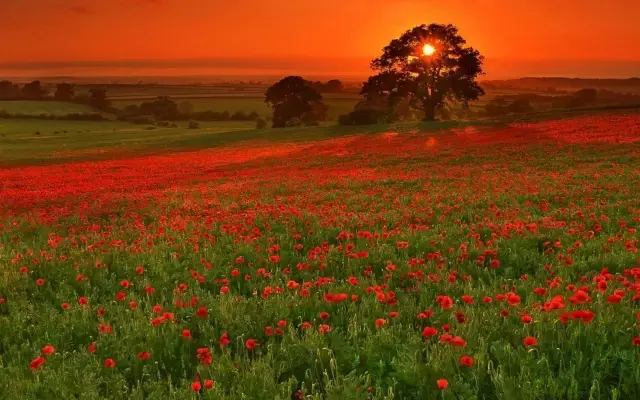
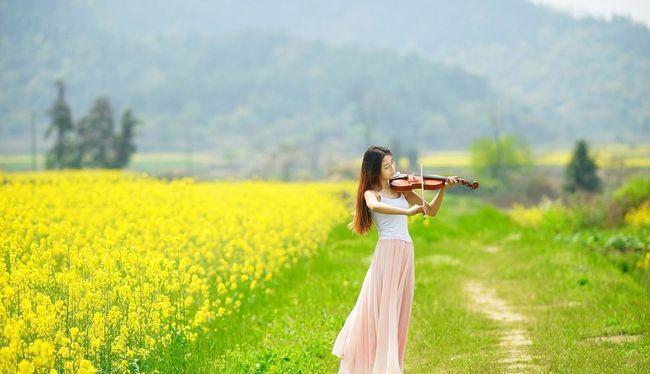
The flowers on the ground are so beautiful, the presence of the sky can be lower
In such photographs, it is sufficient that the sun is merely used to create the atmosphere.
5. "No Day" composition
The most attractive thing about sunset beauty, is the vibrant colors, the warm-toned light-not the sun.
The sun is an important factor in creating this environment, but you only need to thank the sun god when shooting. There is no need to include it in the picture.
You can try putting the sun outside the viewfinder and shooting only the parts that are illuminated by the afterglow; Or look for tall prospects and use it to block the sun.
Preventing the highlighted sun body from appearing directly in the picture can greatly reduce the overall light ratio of the picture, which is more conducive to exposure control.
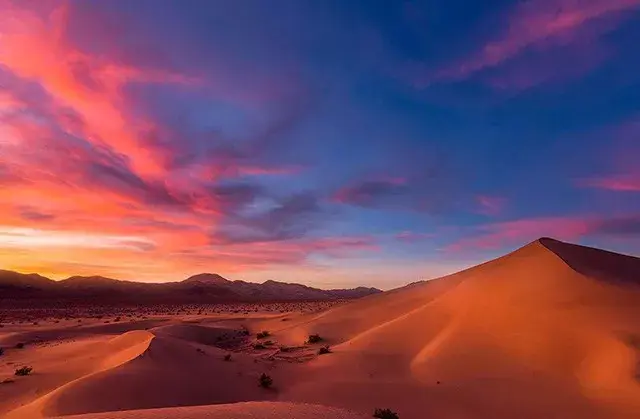
You can even wait for the sun to completely set before shooting.
At this time, the light ratio is very small, and the warm colors will be brighter. Wait for a while, the warm tones disappear, and the "blue hour" of the night is about to enter, which is also a good opportunity to make a film.
However, whether it is the sun just sets, the hours when the warm colors are brightest, or the "blue hour", the duration is relatively short-the same is true of life, and the good times are always fleeting.
Therefore, you should make preparations in advance, find a good seat, design a general composition, set up a tripod, and then quietly wait for the best light to come.
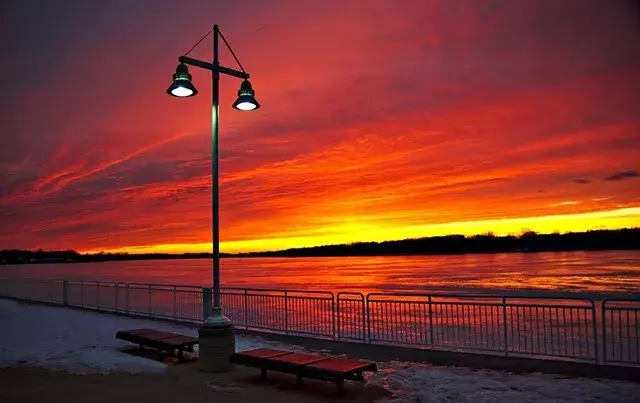
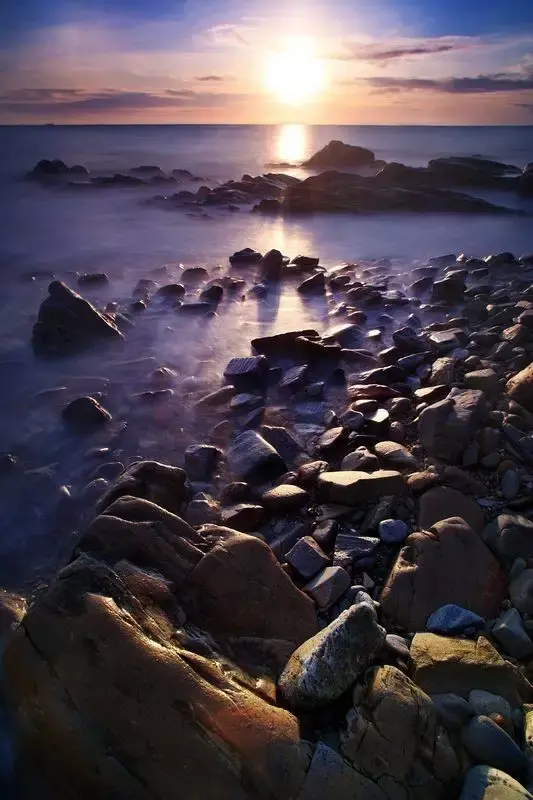
5. Low angle shooting
Shooting at a low angle, the foreground scene is extremely close to the audience, and the details are excellent, which makes the audience have a sense of psychological proximity, a strong sense of presence and substitution.
At the same time, the horizontal perspective effect of low-angle shooting is very strong, and the depth of the picture is also very outstanding.
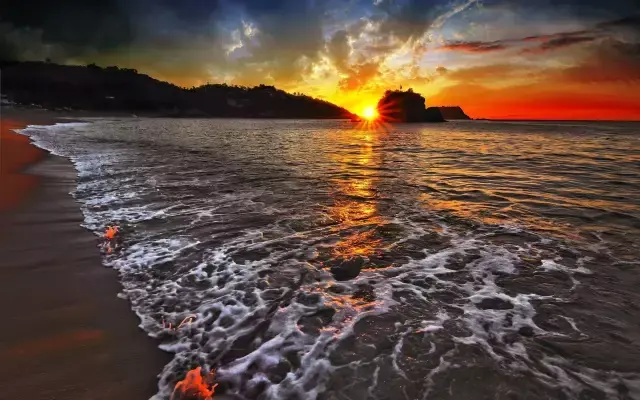
The foreground is so close that the viewer has the feeling of standing on the beach
Low-angle shooting is often matched with edge composition and vertical composition to further enhance the depth of the picture and achieve better results.