At present, the mainstream camera brands on the market mainly include Canon, Nikon, and Sony. Previously, we have introduced the meanings of lens models for Canon and Nikon cameras. For details, please refer to the articles "Canon Camera Lens Nicknames for Beginners in Photography - Jinhua Shuo Photography" and "Nikon Camera Types and Nickel Lens Models - Jinhua Shuo Photography Issue 1". Below, we will introduce Sony mirrorless cameras and lens models.
At present, Sony mainly has three types of cameras: mirrorless cameras, mirrorless cameras, and digital cameras. Considering market share and sales, this article will focus on introducing the types of mirrorless cameras and mirrorless camera lenses.
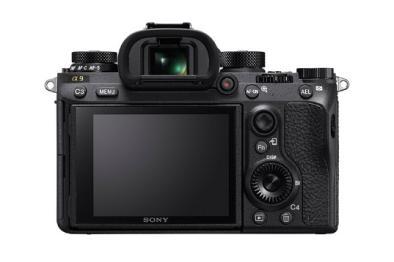
1、 Full frame camera model
① Speed flagship full frame: A9/alpha; 9。
② Image quality pioneer full frame: A7RM3/alpha; 7R III, The old model is A7RM2/alpha; 7R II、A7R/α 7R。
③ Full frame reference full frame: A7M3/alpha; 7M III, The old model is A7M2/alpha; 7M II、A7/α 7。
④ Video expert full frame: A7SM2/alpha; 7S II, The old model is A7S/alpha; 7S。
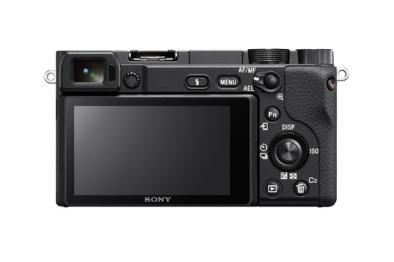
2、 Cut APS-C camera model
Sony has five main models of cropped body designs.
A6500/α 6500: Can record 4K videos, with five axis stabilization, LCD screen foldable and touchable.
A6400/α 6400: Can record 4K videos of S-log2 and S-log3, without five axis stabilization, LCD screen foldable and touchable. Attention A6400/alpha; 6400 was launched later than A6500/alpha; 6500.
A6300/α 6300: Can record 4K videos, without 5-axis stabilization, and the LCD screen can be folded.
A6000/α 6000: Only capable of recording 180P videos, with a foldable LCD screen.
A5100/α 5100: Can only record 180P videos, with 180° Touch sensitive foldable LCD screen, featuring selfies.
Summarize the naming conventions for body models: flagship full frame 9 series, professional full frame 7 series, and cropped 6000 and 5000 series.
3、 The meaning of Sony lens models
At present, Sony mirrorless cameras have four types of lenses, namely G Master lenses, E-mount Zeiss lenses, E-mount G lenses, and regular E-mount lenses.
Firstly, take the Sony G Master lens FE 70-200mm F2.8 GM OSS as an example for explanation.
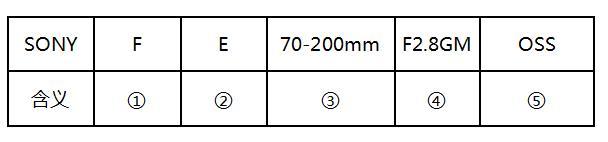
① FE stands for full frame mount, indicating that the lens is dedicated to full frame camera bodies.
② E represents the clipping mount, indicating that the lens is dedicated to the clipping body.
③ 70-200mm: indicates the focal length range of the lens. The fixed focus lens is represented by a single numerical value, such as 50mm. The zoom lens is marked with a minimum focal length of 70mm and a maximum focal length of 200mm
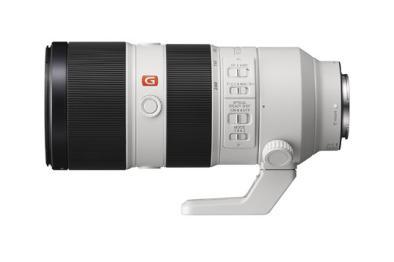
④ Indicates the maximum aperture of the lens. Fixed focus lenses are represented by a single numerical value, such as f/1.4. If the maximum aperture of a zoom lens is a constant aperture, it is represented by a single numerical value such as f/2.8. For lenses where the maximum aperture varies with the focal length, two numerical values are used to represent the maximum aperture at the wide-angle and telephoto ends, respectively, such as f/3.5-5.6.
The Sony G lens is a lens that inherits Minolta technology from Sony. G stands for Gallant in English, which refers to high-end professional lenses that typically use non spherical and low dispersion lenses.
⑤ Indicate the characteristics of the lens. The lens basically adopts the same optical design structure, and only adds this mark when there are slight differences in details. OSS: Sony Optical Stability System, short for Optical Steady Shot.
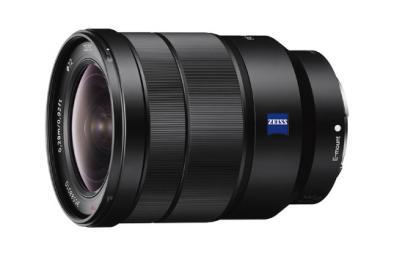
Below is an introduction to the meaning of the E-mount Zeiss lens model.
Taking the Zeiss Vario Tessar T * FE 16-35mm F4 ZA OSS full frame wide-angle zoom lens as an example for explanation.
Vario: Zoom lens, belonging to the Carl Zeiss lens logo.
Tessar: Carl Zeiss lens designed with the Tensei Tessar structure. There are other lens structures, such as the Carl Zeiss lens designed with the Plana Planar structure; Carl Zeiss lens designed with Sonnar structure; The Carl Zeiss lens adopts the Distance anti telephoto lens structure, named after Distance and Gonio.
T *: Carl Zeiss' multi-layer coating technology is currently the most advanced coating technology in the world.
ZA: Carl Zeiss lens designed specifically for Sony, using Sony alpha technology; Mount, belonging to autofocus lenses. ZA is derived from the letter Z in the Carl Zeiss brand and the letter A in the Sony A-series body brand.
The above is a detailed introduction to the meanings of Sony camera models and lens models. I believe that after reading it, everyone will have a further understanding of Sony's camera lenses.