Many photography beginners always ask me how to choose my first camera or ask me to recommend a camera. When I sent the camera and lens model to the other party, they looked confused and had no idea what the recommended camera lens meant. Today, I will explain it to everyone.
1、 Meaning of camera model
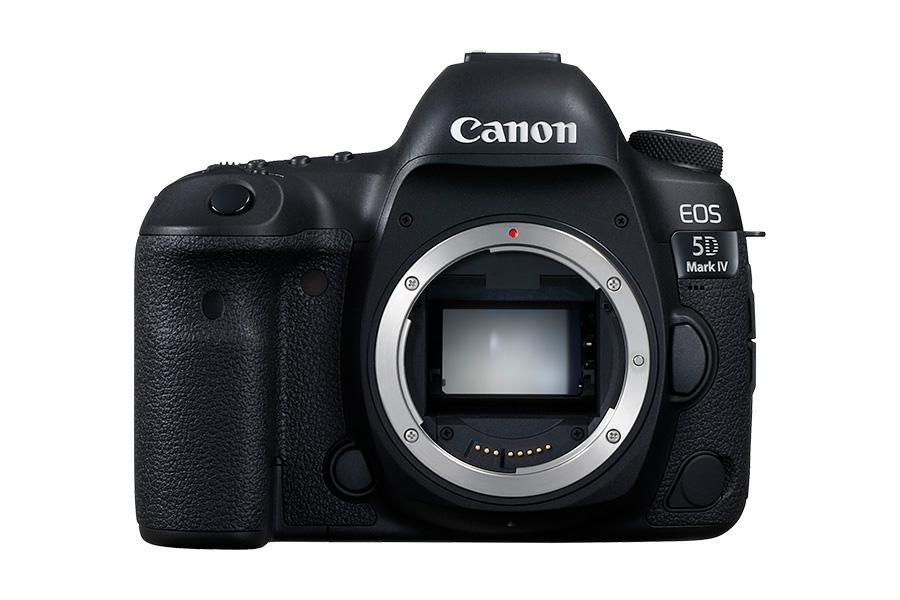
Taking Canon's full frame camera 5D Mark IV as an example for explanation.
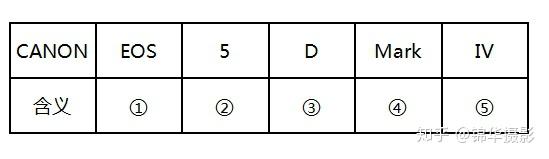
① The EOS
EOS stands for Electro Optical System, which means Electronic Optical System in Chinese.
② Body series
When the number is 1, it represents Canon's flagship DSLR camera, such as the EOS-1D X Mark II.
The one digit number other than 1 represents a Canon professional DSLR camera, and the smaller the number, the greater the professionalism, such as the 5D, 6D, and 7D series.
When the number is two digits, it is a Canon APS-C mid-range DSLR camera, and the model is usually increased by 10, such as 70D, 80D.
When the number is three digits, it is a Canon APS-C entry-level DSLR camera, and the model is usually increased by 50, such as 750D, 800D.
When the number is four digits, it is recommended for Canon APS-C entry-level DSLR cameras, such as 1500D and 3000D.
③ D is the first letter of Digital, representing a digital SLR.
④ Mark in Chinese means model, indicating an improved model based on the basic model. Canon only has professional DSLR cameras and flagship DSLRs.
⑤ The number represents the generation of the product, and the larger the number, the newer the product. As mentioned above, Canon only has professional DSLR cameras and flagship DSLRs.
2、 Meaning of lens model
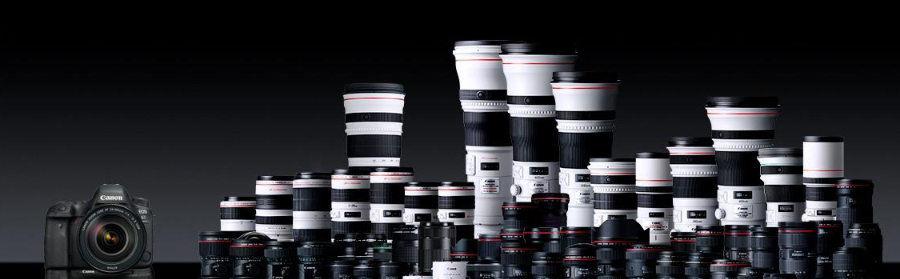
At present, Canon's lenses are mainly divided into four types based on mount: EF, EF-S, EF-M, and EF RF. Among them, EF is dedicated to full frame DSLRs, and EF-S is dedicated to Canon APS-C cropped DSLRs. The EF lens can be directly mounted on the APS-C body, but the EF-S lens cannot be attached to the full frame body, otherwise it will damage the reflector. The EF-M mount is specifically designed for EOS M mirrorless cameras. The RF mount is dedicated to Canon's full frame mirrorless EOS R and EOS RP. Currently, only the following four lenses are available: RF50mm F1.2 L USM, RF28-70mm F2 L USM, RF24-105mm F4 L IS USM, and RF35mm F1.8 MACRO IS STM.
The following specifically interprets the names of EF and EF-S mount lenses.
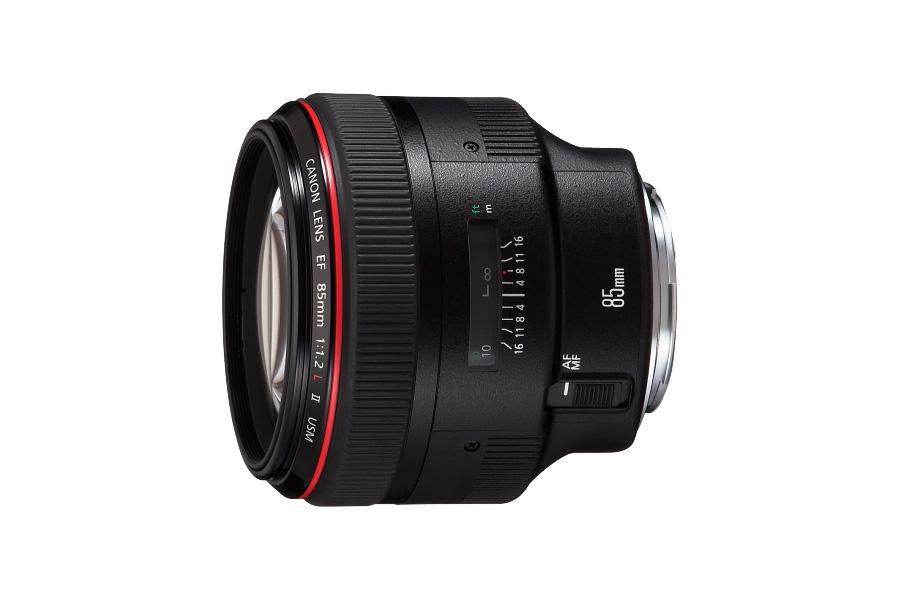
The EF mount lens is suitable for full frame and APS-C format EOS cameras, and can also be installed on EOS film cameras. When installed on the camera, align it with the red mark on the mount.
The EF-S mount lens is a specialized lens for APS-C format EOS digital SLR cameras, and S is the acronym for the first word of Small Image Circle.
EF lens names are composed of various numbers and letters, and can be roughly divided into five parts: ① lens mount, ② focal length range, ③ maximum aperture, and ④ ⑤ lens characteristics. Generally, lenses are arranged in the order of ① to ⑤. If there are many symbols representing the characteristics of the lens, such as the lens name EF 70-200mm f/2.8L IS III USM, these symbols will be arranged at the end in sequence.
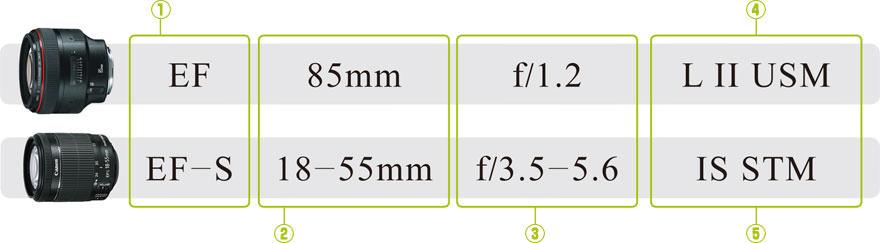
① Indicate the type of EF lens.
The EF-S lens is exclusively for APS-C format models, while the EF-M lens is exclusively for EOS M. When installing lenses other than EF-M for EOS M, a mount adapter EF-EOS M is required.
② Indicates the focal length range of the lens.
The fixed focus lens is represented by a single numerical value, while the zoom lens is marked with the minimum and maximum focal lengths.
③ Indicates the maximum aperture of the lens.
Fixed focus lenses are represented by a single numerical value. When the maximum aperture of a zoom lens is a constant aperture, a single numerical value is used to represent it. For lenses where the maximum aperture varies with the focal length, two numerical values are used to represent the maximum aperture at the wide-angle and telephoto ends, respectively.
④ ⑤ represents the characteristics of the lens.
The lens basically adopts the same optical design structure, and only adds this mark when there are slight differences in details. II. III represents the second and third generations of lenses with the same optical structure. STM indicates that the type of autofocus drive motor is a stepper motor.
L stands for Luxury, indicating that this lens belongs to the high-end category.
USM/STM refers to the types of autofocus drive motors, including STM stepper motors and USM ultrasonic motors.
IS stands for Image Stabilizer, which refers to the optical hand shake compensation mechanism installed inside the lens.
DO refers to a lens that uses DO lenses (multi-layer diffractive optical elements).
Its feature is that it can use diffraction to change the path of light and can also reduce the weight of the lens.
The above is a detailed introduction to Canon camera models and lens models. As for the nicknames of Canon cameras and lenses, such as“ Invincible Umbrella; 、 “ Big eyes” 、 “ Love the little white rabbit to death; We will introduce it to you in the next article.