When shooting female characters, try to capture the most beautiful feeling possible. In addition to facial expressions, attention should also be paid to overall brightness, blurring techniques, angles, and other factors.
Only in this way can satisfactory portrait photography be taken. If you can achieve a different feeling from the photos taken with a touchscreen phone, then your subject or model will definitely be very happy.

Firstly, it is important to pay attention to the facial expressions of the characters and the overall composition
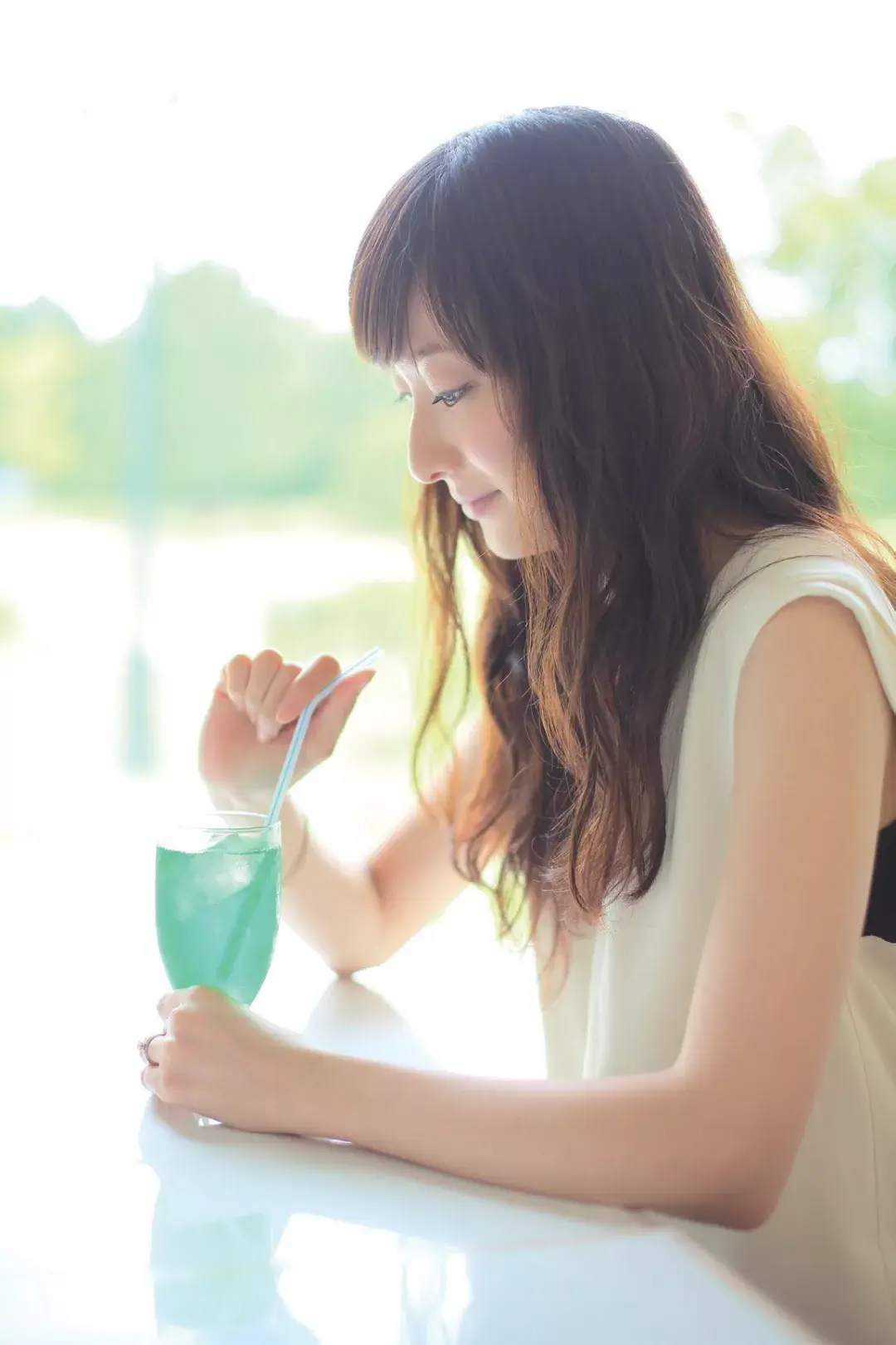
This is the most enjoyable leisure time after lunch. Outside the window is full of summer sunshine.
In this artwork, the model has a serene expression and their gaze is not directed towards the camera. Looking at the object in my hand, there is a hint of mature femininity overall.
Because the window as the background is in a strong backlit environment, we boldly increased the exposure.
Detailed Explanation of Shooting Points 01
The character's gaze leaves the camera, fixed on the object in their hand, showing a faint weariness and leisure. In addition, the character is positioned on the right side of the viewfinder, while preserving the space in the direction of the character's line of sight.
02
The expression on the hands is also very accurate. Preparing hats, handbags, flowers, drinks, and other items in advance can greatly reduce the difficulty of capturing hand expressions.
03
The light outside the window is very bright, although the person is not under direct sunlight, they are actually in a backlit state. Hair appears very clear and distinct in this lighting environment.
04
Use a fixed focus lens with a large aperture for shooting. Flatten the background perfectly to create a gentle overall atmosphere.
Show the character's inner self through their facial expressions
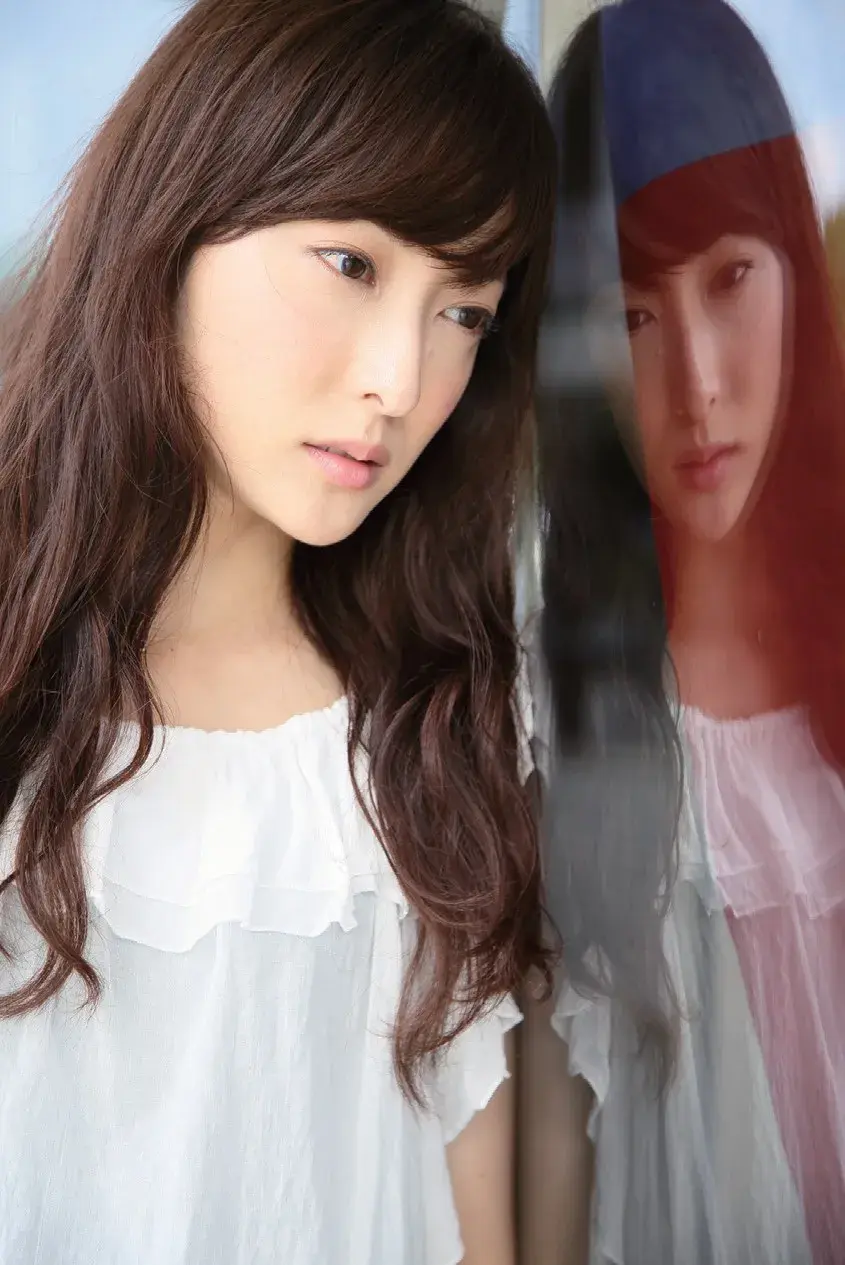
This photo also incorporates the reflection of the person on the window into the picture. It can be seen that there are two types of facial expressions that are not exactly the same. They are not only a very artistic pattern element, but also allow viewers to feel the complex and tangled inner world of the characters.
Using a telephoto lens (with a focal distance of 80mm), increasing the aperture and compensating for+0.7EV exposure, the facial expressions of the characters are displayed very clearly.
Detailed Explanation of Shooting Points 01
In character shooting, it is very important to guide the subject to show the best expression. Start practicing with a smile first, and then try other expressions.
02
Don't simply fill the entire picture with the face of a character, include the surrounding environment on a large scale to create a sense of space. Yu Bai's approach can also change the overall feel of the work.
03
If it is a backlit environment, use forward exposure compensation until the character's expression can be clearly expressed.
04
At least a safe distance of 1 meter, the best way to travel during the epidemic is by car, bike, or walking.
Proactively configuring spatial orientation awareness
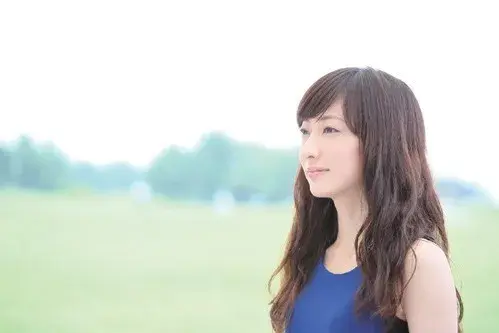
Reserve the space of the line of sight direction (basic technique)
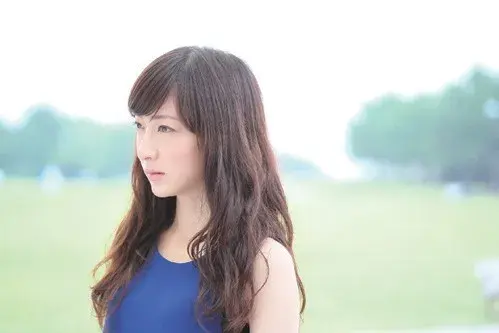
Leave space in the opposite direction of the line of sight
When a character is in a horizontal or diagonal posture, a basic practice is to preserve a large area of space in the direction of the line of sight.
The advantage of this is that it can provide a sense of stability in the image. However, preserving space in the opposite direction of the line of sight is not completely unacceptable.
Especially when it comes to displaying a sense of nervousness and unease, this is a very effective technique.
Using virtualization techniques to create a soft and gentle atmosphere in the picture

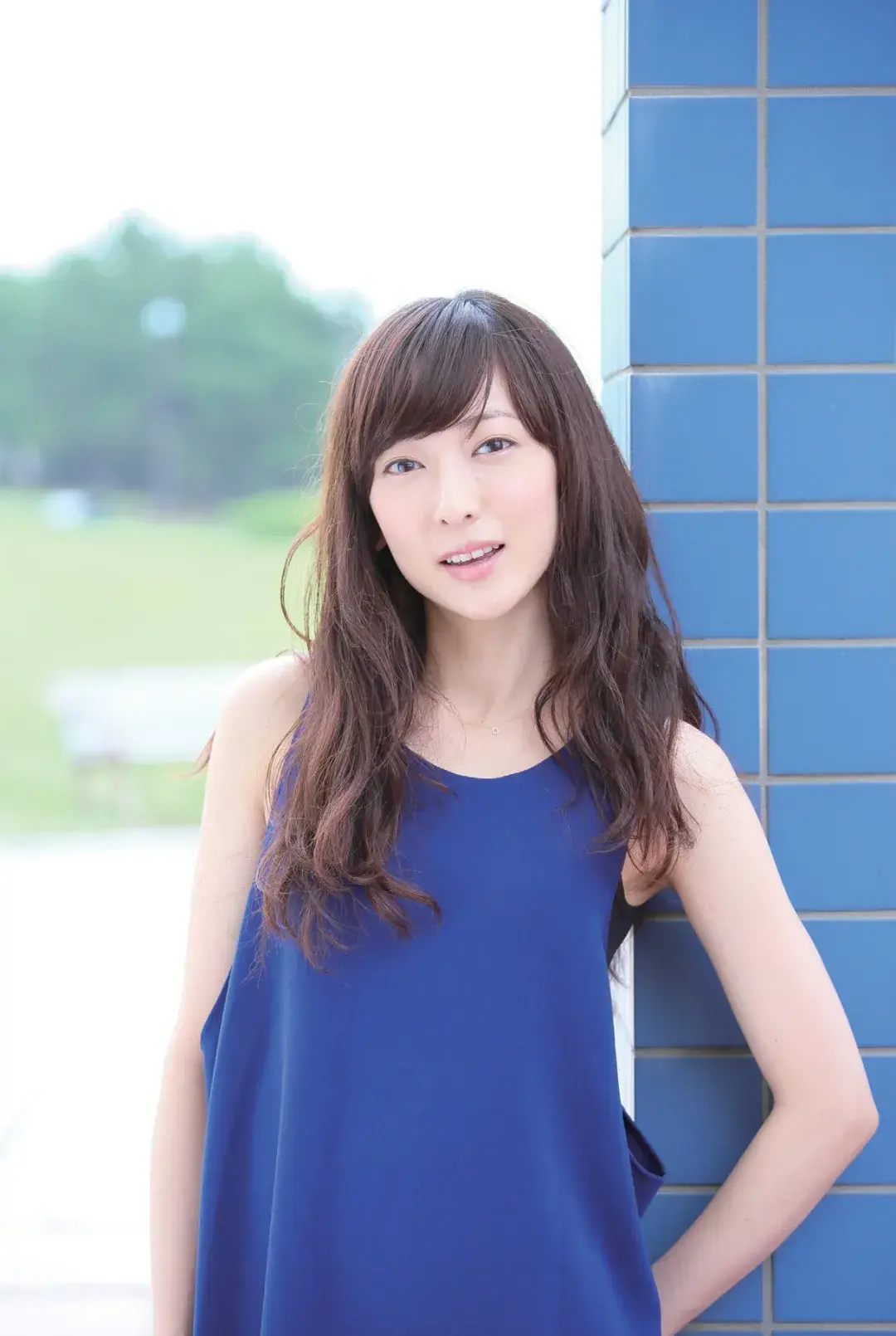
This character artwork features blue ceramic tile columns that are similar in color to the clothing as the background, with the model leaning against the columns. Use a telephoto lens, large aperture, and blur the background at the same time.
The photographer consciously utilized the contrast effect between the hard material of the tiles and the softness of the blurred background. Adequate exposure compensation makes the characters' faces appear very bright.
Detailed Explanation of Shooting Points 01
Choosing a backlit environment allows hair to be exposed to direct sunlight. This is one of the key shooting techniques that highlights the charm of female characters.
02
+2EV exposure compensation can achieve brighter and clearer facial effects than the actual situation. The focus is on the person's eye area.
03
The posture of the character leaning slightly against the pillar. The hard ceramic tile columns create an excellent contrast effect with the characters and soft background.
04
Use a large aperture to blur the background. In addition, telephoto lenses are often used in portrait photography because they are prone to blurring the background and prevent the subject from deforming (reducing perspective effects).
Using telephoto lenses to highlight the presence of characters
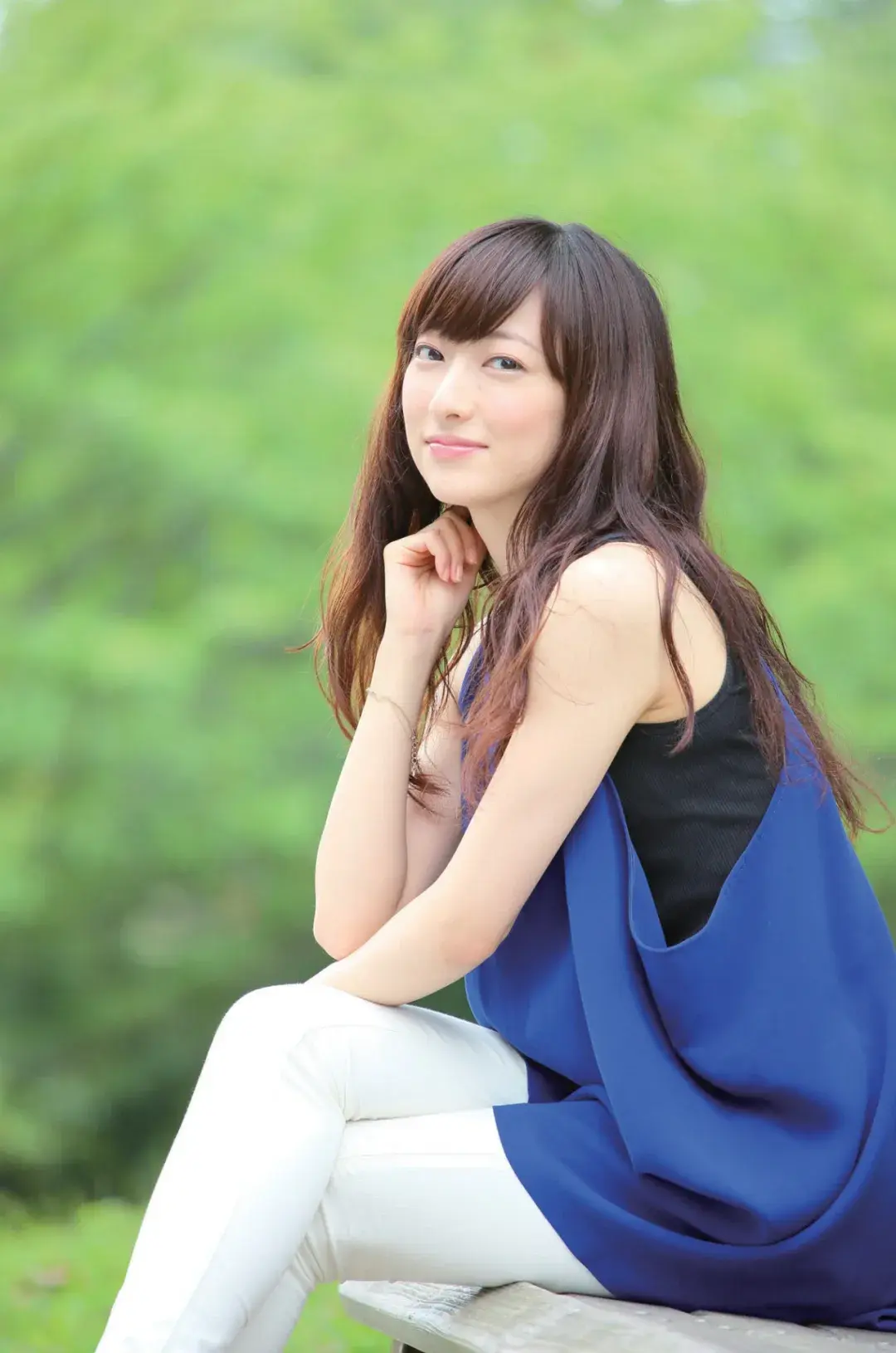
Set the focus distance to 200mm for shooting (the lens focus range is 70-200mm).
The green color of the blurred background seems to have melted, and the characters are clearly highlighted.
When blurring the background, it is crucial to maintain a certain distance between the characters and the background. The exposure compensation is+1.7EV, which is brighter than the actual effect. Photography by Maki Kawahe
The character is located behind a flower cluster, blurring the foreground
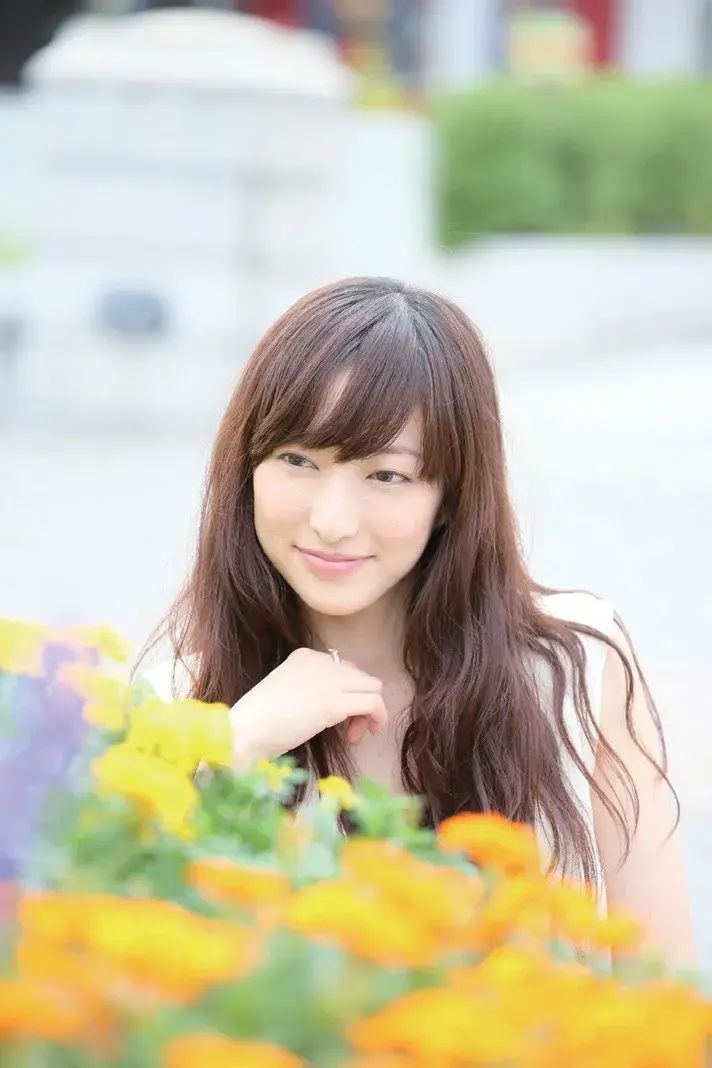
In front of the characters is a blurred flower cluster, giving the overall work a bright and magnificent feeling.
The key to using foreground virtualization technology is distance. If the flower clusters are located particularly close to the subject being photographed, they will not produce a very good blurring effect.
Include the surrounding environment and utilize the atmosphere of the current scene
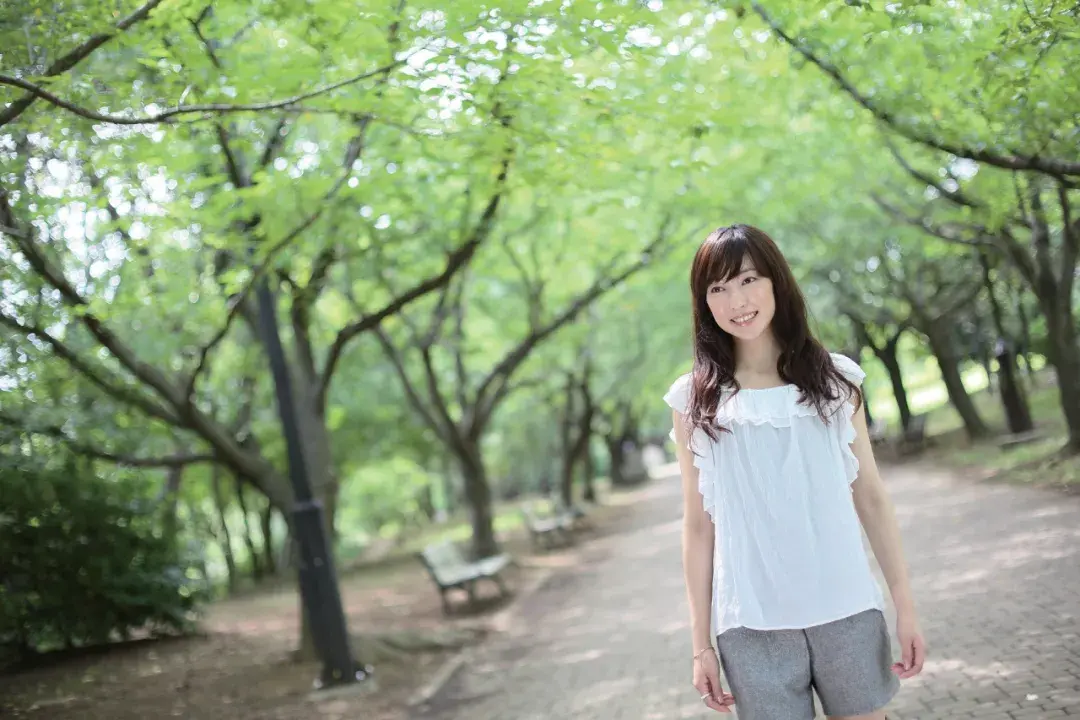
A work on a lush and verdant tree lined walkway. The surrounding trail trees are extensively included in the work, fully utilizing the refreshing overall atmosphere.
When shooting, the camera is tilted at a certain angle, creating a particularly dynamic effect. At the same time, the composition structure also intentionally extends the trail into the distance. The lens is a 50mm fixed focus lens.
Detailed Explanation of Shooting Points 01
Although the area occupied by the trail trees in the background is very large, it appears less cluttered through background blurring. With the addition of exposure compensation, the overall effect of the work appears to be enveloped by green light.
02
Shoot slightly away from the beautiful woman who is the subject of the shot, and place a large area of green elements in the composition within the shooting range. The beauty is not located in the center of the photo, but slightly to the right. The surrounding green color makes the facial color of the person less ideal, so a reflector is used to reflect strong light onto the person's face.
03
The trail continues to extend into the distance. This highlights the feeling of continuous extension.
04
The effect of tilting the camera for shooting is to obtain a sense of overall motion, or jumping sensation.
Using a telephoto lens to zoom in on distant scenery
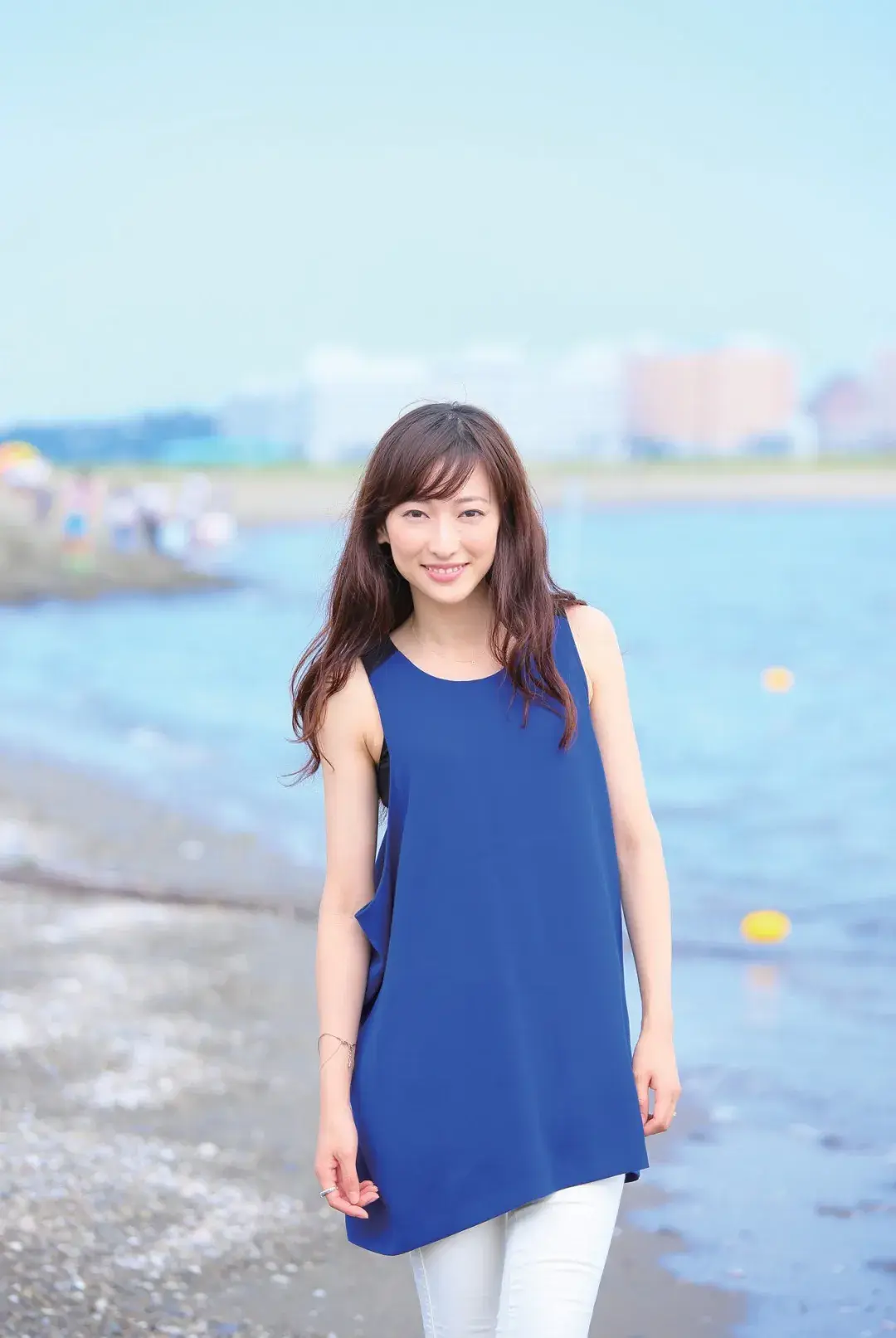
This image was taken using a telephoto lens with a focal length of 135mm. Set the aperture to maximum (F4).
The buildings in the background, although actually very far away, can still be seen in the actual effect, which is the effect of weakening the perspective effect. Focal length and shooting distance
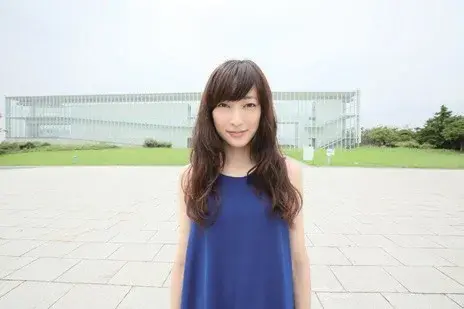
16mm (approximately 0.6m)
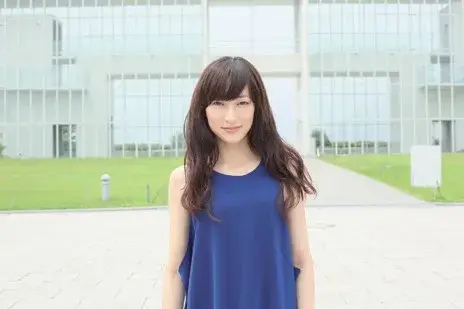
50mm (approximately 1.8m)
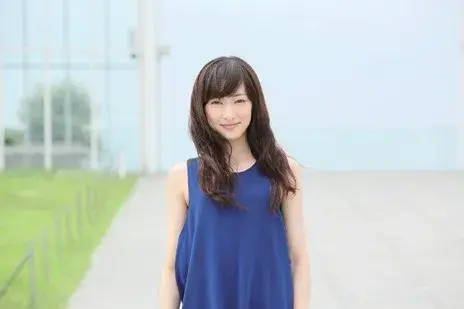
200mm (approximately 7m)
Using a wide-angle lens for close-up shooting and using a telephoto lens for long-distance shooting, both methods can maintain the size of the subject being photographed. But the effect looks completely different.
The background size contained within the viewfinder is completely different, and the perspective effect is stronger when shooting up close.
Reflective Plates in Character Photography
Reflective plates are often used in portrait photography. This circular reflector is very suitable for outdoor photography.
Usually, white reflective plates are used. When particularly strong reflection is required, silver reflective plates are used.
The size of the reflector should be roughly the same as the size of the subject being photographed.
However, considering portability, starting with a reflector with a diameter of about 1m is sufficient for portrait photography.